
 EN
EN
The Reality of Claw Punctures and Practical Experience
In my years of working closely with pet supply retailers and manufacturing custom plastic solutions at Sunho, I have witnessed one recurring nightmare for cat owners: the "shredded liner" disaster. Many people assume that any plastic bag will suffice, but cat behaviorists and experienced pet parents know that feline claws are essentially biological needles. From our factory’s internal testing, we’ve observed that standard thin-gauge plastics fail within seconds of a cat’s natural scratching instinct. Choosing the right material for cat litter box liners is the difference between a five-second cleanup and a thirty-minute ordeal of scrubbing urine-soaked plastic shards from the bottom of a pan. At Sunho, we’ve developed our heavy-duty liners based on real-world feedback from multi-cat households where durability isn't just a feature—it's a necessity.
The Superiority of LDPE in Puncture Resistance
When analyzing the chemical composition of high-performance cat litter box liners, Low-Density Polyethylene (LDPE) stands out as the gold standard. Unlike its cousin, High-Density Polyethylene (HDPE), which is crinkly and prone to "zipper" tears if punctured, LDPE is flexible and possesses high impact strength. This professional-grade polymer allows the liner to stretch rather than snap. In our Sunho laboratory, we utilize a specialized blend of virgin LDPE to ensure maximum tear resistance. If a cat’s claw manages to pierce the surface, the material's molecular structure resists the propagation of that tear. This expertise in polymer science is why we recommend thick-gauge LDPE for anyone looking to eliminate the frustration of leaked litter and trapped odors.
Understanding the Role of HDPE in Economy Solutions
While LDPE is the premium choice for strength, High-Density Polyethylene (HDPE) still plays a significant role in the market for cat litter box liners, particularly for those on a budget or with senior cats who are less aggressive scratchers. HDPE is known for its excellent moisture barrier properties and tensile strength. It is the material typically found in grocery bags—thin, lightweight, and cost-effective. However, the trade-off is its susceptibility to sharp objects. For a single-cat household with a gentle pet, an HDPE liner from Sunho’s economy line provides a reliable shield against liquid seepage. Our expertise ensures that even our HDPE options are treated with anti-slip additives to keep the bag from shifting, a common complaint among users of generic store brands.
The Innovation of Cross-Laminated and Multi-Layer Films
As an industry leader, Sunho has moved beyond single-layer plastics to embrace multi-layer co-extrusion technology. This is where professional manufacturing meets practical utility. By layering different types of polymers, we can create cat litter box liners that offer the "best of both worlds": a scratch-resistant outer layer and a leak-proof inner core. Veterinary hygiene experts often point out that the primary cause of litter box odors is bacteria trapped in microscopic scratches on the plastic surface. Our multi-layer films are designed to be "slick" enough that claws slide off rather than dig in. This technical advancement significantly extends the life of the liner and maintains a more sanitary environment for both the pet and the owner.
Why Scented vs. Unscented Materials Matter
Trustworthiness in manufacturing means being transparent about additives. Many cat litter box liners come with heavy artificial fragrances to mask smells, but many feline health experts—including those from the American Association of Feline Practitioners—warn that cats have a sense of smell 14 times stronger than humans. Overpowering scents can lead to box aversion. At Sunho, we offer materials infused with localized odor-neutralizing agents rather than perfumes. By integrating these agents directly into the plastic resin during the extrusion process, the liner works at a molecular level to trap ammonia molecules. This ensures that the material itself is part of the hygiene solution, rather than just a physical barrier.
The Structural Importance of Drawstring Engineering
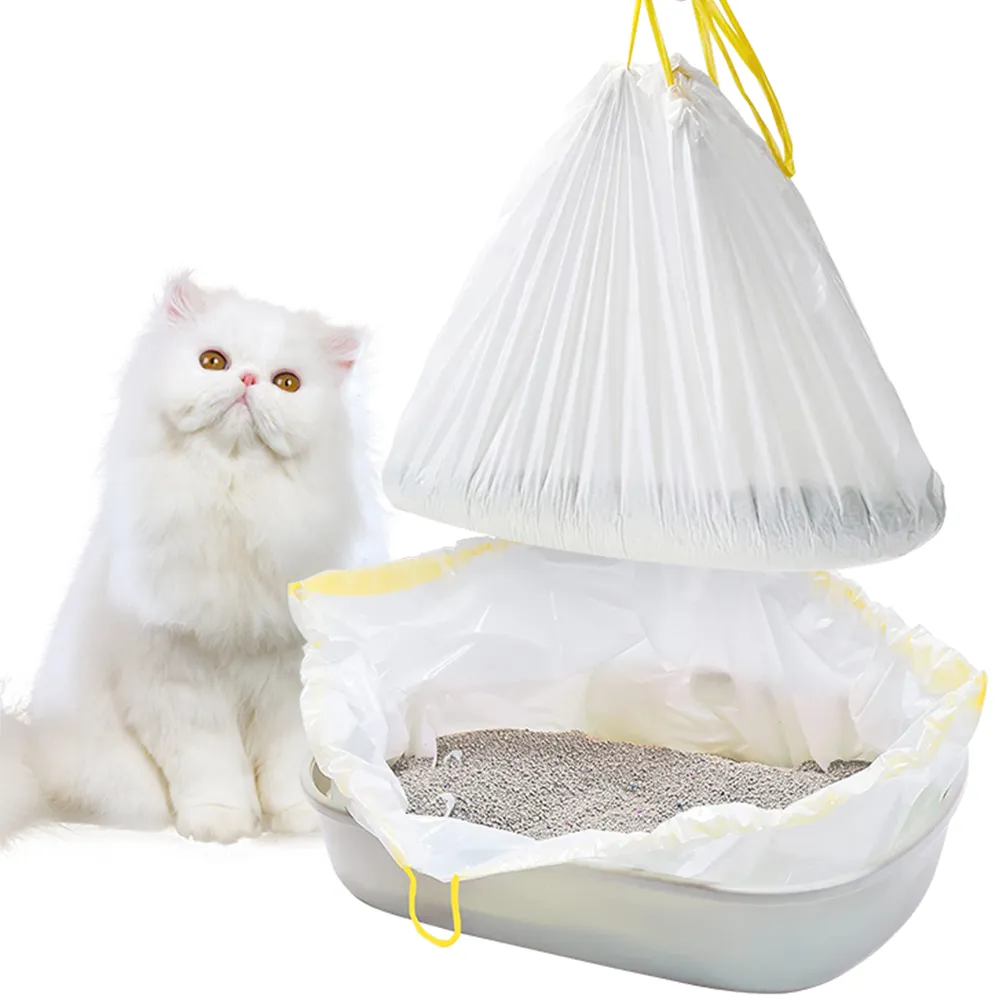
A material is only as good as its delivery system. In our case studies, we found that even the strongest material fails if the liner collapses into the litter. This is why the integration of reinforced drawstring handles is a critical component of professional cat litter box liners. At Sunho, we use a high-tensile strength PP (polypropylene) for our drawstrings. This ensures that when it is time to change the litter, you can lift up to 30 pounds of heavy, wet clay without the handles snapping. The drawstring also allows the user to cinch the liner tightly around the rim of the box, preventing the plastic from sagging—a common trigger for cats to start biting and clawing at the liner itself.
Assessing Environmental Impact and Biodegradable Alternatives
Today’s consumers are increasingly concerned with sustainability, and we believe in providing honest, accurate information regarding "green" materials. While traditional plastics are incredibly durable, we are seeing a shift toward compostable resins like PBAT and cornstarch blends for cat litter box liners. However, it is important to note that these materials are often softer and less scratch-resistant than LDPE. As an authority in the field, Sunho advises customers to balance their environmental goals with their functional needs. We are constantly refining our recycled-content liners, which provide a middle ground by reducing virgin plastic use while maintaining the structural integrity required to handle heavy cat litter.
Final Verdict on Material Selection for Longevity
In conclusion, after evaluating thousands of production cycles and customer testimonials, we believe that a 2-mil thickness LDPE or a multi-layer co-extruded film is the absolute best material for cat litter box liners. It provides the transparency and reliability that pet owners need to maintain a clean home. Choosing the right material isn't just a purchase; it's a strategy for long-term pet care. By sourcing from a specialized manufacturer like Sunho, you gain access to industrial-grade durability that has been refined through years of technical expertise and a deep understanding of feline behavior. Investing in high-quality materials today saves time, money, and the health of your household environment tomorrow.
Table of Contents
- The Reality of Claw Punctures and Practical Experience
- The Superiority of LDPE in Puncture Resistance
- Understanding the Role of HDPE in Economy Solutions
- The Innovation of Cross-Laminated and Multi-Layer Films
- Why Scented vs. Unscented Materials Matter
- The Structural Importance of Drawstring Engineering
- Assessing Environmental Impact and Biodegradable Alternatives
- Final Verdict on Material Selection for Longevity