
 EN
EN
Understanding the Common Frustrations with Poorly Fitted Bin Liners
In our years of manufacturing high-quality waste management solutions at Sunho, we have seen countless customers struggle with the same issue: a bin liner that either slips down into the trash or hangs over the edge like an oversized cloak. Finding the perfect fit bin liners is not just about aesthetics; it is about hygiene and efficiency. From our experience working with global distributors, we know that a poorly fitted liner leads to leaks, unnecessary waste of plastic, and a frustrating cleanup process. To avoid these "trash day disasters," you need a systematic approach to measuring and selecting your supplies.
Accurate Measurement Techniques for Every Bin Shape
To ensure you choose the right bin liners, you must start with precise measurements. Most users make the mistake of guessing based on the gallon or liter capacity marked on the bin, but shapes vary significantly. For a rectangular or square bin, measure the circumference by adding the width and depth and multiplying by two. For a circular bin, multiply the diameter by 3.14 (Pi). At Sunho, we recommend that the width of the bin liners should be approximately half of the bin's circumference. For the length, measure the height of the bin and add 3 to 4 inches to allow for an "overhang" that secures the bag in place.
The Science of Microns and Gauges in Material Strength
Expertise in the waste bag industry requires an understanding of material thickness. Not all bin liners are created equal. High-Density Polyethylene (HDPE) is thinner but excellent for office paper and lightweight trash, while Low-Density Polyethylene (LDPE) is thicker and more puncture-resistant, ideal for kitchen waste or sharp objects. At Sunho, we utilize advanced multi-layer co-extrusion technology to ensure our bin liners offer maximum tensile strength even at lower gauges. When selecting your liners, consider what you are throwing away. If you deal with heavy or wet waste, a higher micron count is essential to prevent the bottom from giving way.
Matching Closure Types to Your Lifestyle Needs
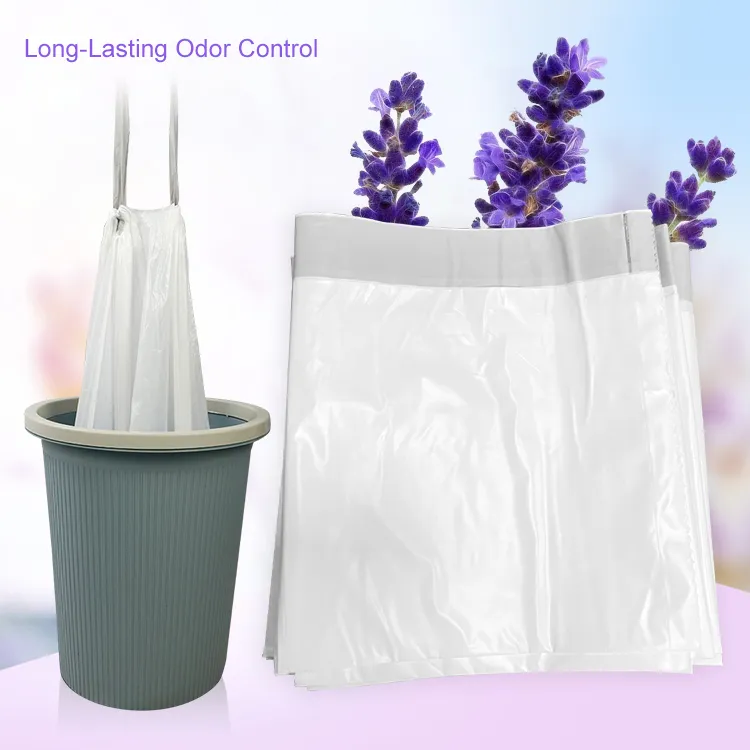
The "perfect fit" also extends to how you close and carry the bag. Through our extensive case studies with hospitality and residential clients, we’ve found that the choice of closure significantly impacts user satisfaction. Drawstring bin liners are the gold standard for convenience, providing a built-in handle and a tight seal. However, for industrial use, a flat top with a twist tie might be more cost-effective. Sunho’s product line includes specialized drawstring designs that grip the rim of the bin, ensuring that the bin liners stay in place no matter how heavy the load becomes.
Why Quality Standards and Certifications Matter for Trust
Trustworthiness is built on transparency and quality control. When sourcing bin liners, it is crucial to look for manufacturers that adhere to international standards. At Sunho, our production facility follows ISO 9001 standards, and we conduct rigorous "drop tests" and "puncture tests" on every batch. Experts in environmental science also suggest looking for liners that use recycled content or are biodegradable if your local infrastructure supports it. By choosing a transparent manufacturer like Sunho, you ensure that the bin liners you use are chemically safe, durable, and ethically produced.
Troubleshooting Common Sizing Mistakes
Even with measurements, some specialized bins (like slim-profile or dual-compartment recyclers) can be tricky. A professional tip from our technical team: if you find your bin liners are constantly vacuum-sealed to the bottom of the bin, making them hard to remove, try drilling a small air hole near the base of the trash can itself. This breaks the suction. Additionally, always check the "gusset" of the bag. A star-seal bottom (which we use in many Sunho bin liners) allows the bag to expand and conform to the shape of the bin, eliminating wasted space and reducing the risk of leaks at the corners.
The Economic and Environmental Value of a Perfect Fit
Selecting the right bin liners is an investment in both your pocket and the planet. Using a bag that is too large is a waste of plastic and money, while a bag that is too small leads to double-bagging and messes. Our data shows that clients who switch to custom-fit bin liners reduce their plastic consumption by up to 15% annually. Sunho is committed to providing a wide range of sizes to ensure that every customer finds their specific match, promoting a more sustainable and organized waste management routine for homes and businesses alike.
Table of Contents
- Understanding the Common Frustrations with Poorly Fitted Bin Liners
- Accurate Measurement Techniques for Every Bin Shape
- The Science of Microns and Gauges in Material Strength
- Matching Closure Types to Your Lifestyle Needs
- Why Quality Standards and Certifications Matter for Trust
- Troubleshooting Common Sizing Mistakes
- The Economic and Environmental Value of a Perfect Fit