
 EN
EN
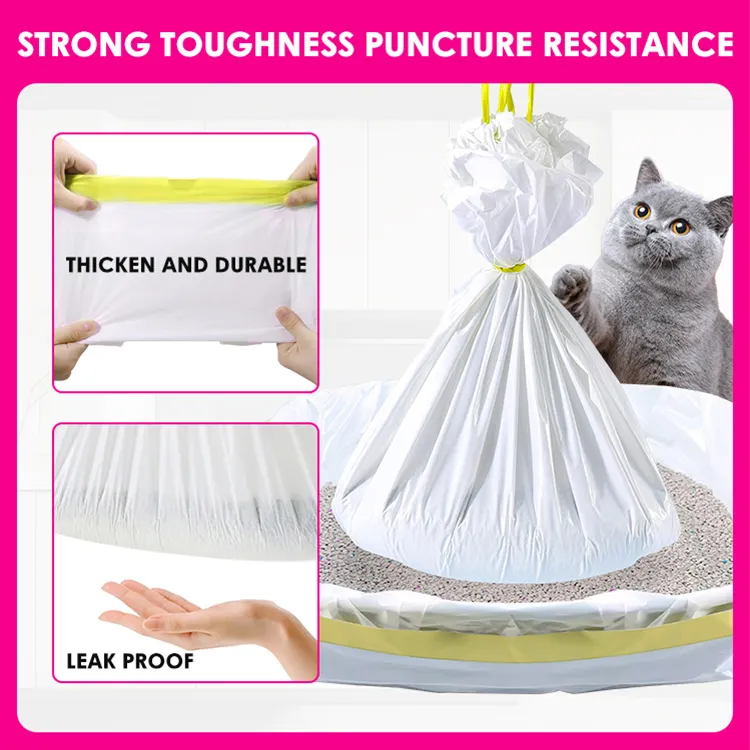
Cat litter box liners are a practical tool for reducing the time and effort involved in litter box maintenance — but many pet owners and pet product buyers discover that liner performance varies significantly depending on material quality, thickness, and how the liner is fitted and handled. Getting the most out of liners requires more than simply placing one in the box before adding litter. Understanding the mechanics of different liner designs, which configurations work with different litter box types including automatic self-cleaning models, and how to evaluate liner specifications helps both consumer buyers and B2B sourcing teams choose the right product for their needs.
Why Liner Thickness and Material Matter More Than They Appear
The most common complaint about cat litter box liners is premature failure — a liner that tears during use, splits at the seams when being removed, or becomes perforated by a cat's claws during scratching. These failures are almost always traceable to liner thickness and material quality rather than the concept of using liners itself.
Cat litter box liners designed for reliable performance are typically produced from virgin polyethylene materials including PE, HDPE, and LLDPE, at thicknesses ranging from 2.0 to 3.5+ mil. At these thicknesses, a properly fitted liner can withstand normal scratching from most domestic cats without immediate perforation. Thinner liners — often sold at lower price points — may rate at 1.0 to 1.5 mil, which is frequently insufficient to resist the repeated claw contact that occurs during normal litter use. The difference between a 1.5 mil and a 3.0 mil liner is not subtle: in practical use, the thicker liner significantly extends how long it remains intact between cleaning cycles.
Material grade also matters. Virgin resin liners have consistent film properties throughout, while liners using recycled or blended resins may have uneven thickness distribution and weaker points at seam edges. For liners used in enclosed or covered litter boxes where gases accumulate, the quality of the film seal also affects odor containment.
Fitting the Liner Correctly: The Step Most Users Skip
A liner that does not sit flush against the walls and base of the litter box is more likely to shift during use, bunch under the litter weight, and create pressure points where tears initiate. Correct fitting technique involves opening the liner fully, positioning it over the box opening, and smoothing it down all four sides before the cat has access to the box.
For standard rectangular litter boxes, most cat litter box liners are manufactured with dimensions to fit boxes in a range of sizes, but a liner that is too large will bunch at the base and create a double-layer pocket that cats may scratch through more easily than a taut, flush-fitted liner. A liner sized appropriately for the box — fitting snugly at the corners without excessive overhang at the rim — performs more reliably than an oversized liner used because it was available.
For litter boxes with a lip or rim, securing the liner edge over the outside of the rim before adding litter is the single most effective technique to prevent the liner from pulling inward under litter load. Many liners include a drawstring or elastic top for this purpose. Using this feature consistently is more effective than any other single adjustment to liner longevity.
Using Cat Litter Box Liners with Automatic Self-Cleaning Boxes
The growing adoption of automatic and self-cleaning litter boxes — including models such as Litter-Robot 3, 4, and 5, Neakasa, Petkit, and Whisker — has created demand for liners that are specifically compatible with the globe or drum geometry of these units. Standard flat-bottom liners designed for rectangular manual boxes do not fit properly in the curved base of automatic units, leading to poor seating, displacement during the rotation cycle, and waste contamination of the globe interior.
Liner configurations designed for automatic litter boxes use a shaped bottom or circular base panel that conforms to the interior of the globe or drum before litter is added. These compatible liners allow users to pull out a used liner and insert a new one between cycles, reducing the frequency of full manual cleaning of the globe interior. For users of automatic litter boxes, using a compatible liner as the manufacturer intended can reduce the need for deep cleaning of the globe by a significant margin — with some configurations reducing deep-cleaning frequency by up to 80% compared to operating without liners. The key is ensuring the liner geometry matches the specific model in use, as compatibility is not universal across brands.
Application Example: Managing Multiple Cats in a High-Demand Household
In a household with three or more cats sharing two litter boxes, the demand on each box is substantially higher than in single-cat environments. Without liners, boxes in this scenario typically require a full litter dump and scrub every 3 to 4 days to prevent ammonia buildup from urine that has saturated the litter and contacted the box base. This cleaning cycle involves emptying the entire litter load, scrubbing the box interior, drying it, and refilling — a time-intensive process.
With 3.0 mil or above virgin PE liners properly fitted to each box, the cleaning cycle changes materially. When the liner is intact, the box base and walls remain uncontaminated. The caretaker removes the top layer of soiled litter with a scoop, and when the full liner needs replacement, lifts the liner out with all residual litter contained within it, inserts a new liner, and refills. The box itself does not need scrubbing at each change. This can extend the interval between full box washes from every 3–4 days to every 1–2 weeks, depending on cat load — representing a meaningful reduction in routine maintenance time. The reduction in direct contact with used litter also reduces the caretaker's exposure during cleaning.
How to Evaluate Liner Specifications When Sourcing
For pet product retailers, private label buyers, or B2B distributors sourcing cat litter box liners at volume, the following specification points are the most relevant to product performance and customer satisfaction: stated film thickness in mil, material type (virgin PE, HDPE, or LLDPE is preferable over unspecified recycled blend), compatibility dimensions for the litter box types in your target market, closure mechanism (drawstring, elastic top, or open top), and certification coverage for chemical safety in consumer products. CE marking, REACH compliance, and RoHS compliance are the relevant certifications for products in European and international consumer markets. ISO 9001:2015 certification indicates that the manufacturer maintains a documented quality management system covering production consistency.
SUNHO Packing (Guangdong Sanhe Packaging Products Co., Ltd.) produces cat litter box liners using virgin PE, HDPE, and LLDPE materials at thicknesses from 2.0 to 3.5+ mil, with compatibility designed to cover Litter-Robot 3/4/5, Neakasa, Petkit, and Whisker automatic litter box models. Their certifications include CE, REACH, RoHS, and ISO 9001:2015. For B2B buyers evaluating private label or OEM liner programs, requesting specification documentation alongside samples for fit testing across target litter box models provides the most direct path to qualifying a supplier for your product range.
Frequently Asked Questions
Q: Why do cat litter box liners keep tearing during normal use?
A: Premature tearing is almost always caused by liners that are too thin for the scratching load involved, or liners that are not fitted flush against the box walls. Liners rated below 2.0 mil are prone to perforation from normal cat claw contact during scratching and covering behavior. Switching to liners rated at 2.5 to 3.0 mil or above with virgin PE or LLDPE material typically resolves premature failure. Correct fitting — smoothing the liner down all four walls before adding litter and securing the top edge over the rim — also significantly reduces tearing initiated by shifting under litter weight.
Q: Can standard rectangular litter box liners be used in Litter-Robot or other automatic self-cleaning boxes?
A: Standard rectangular liners are not compatible with the globe or drum geometry of automatic self-cleaning boxes. The curved interior of these units requires a specifically shaped liner designed to conform to the base geometry. Using an incompatible liner will result in poor seating, displacement during the rotation cycle, and ineffective waste containment. Liners marketed as compatible with specific automatic litter box models (e.g., Litter-Robot 3, 4, or 5) should list the model compatibility explicitly in the product specification.
Q: How often should I change a cat litter box liner?
A: Liner change frequency depends on cat load, litter type, and the liner's thickness and integrity. For a single-cat household using a properly fitted 3.0 mil liner with daily scooping, a liner can typically remain intact for one to two weeks before replacement. In multi-cat households or high-use environments, weekly liner changes are more appropriate. Do not continue using a liner after it has been perforated — once the base layer is broken, the box surface is exposed to contamination and the protective benefit is lost.
Table of Contents
- Why Liner Thickness and Material Matter More Than They Appear
- Fitting the Liner Correctly: The Step Most Users Skip
- Using Cat Litter Box Liners with Automatic Self-Cleaning Boxes
- Application Example: Managing Multiple Cats in a High-Demand Household
- How to Evaluate Liner Specifications When Sourcing
- Frequently Asked Questions