
 EN
EN
Why Flushing Commode Liners Is Unsafe and Prohibited
Sewer infrastructure damage and wastewater treatment plant failures caused by commode liners
Flushing commode liners causes severe, preventable damage across municipal sewer systems. Unlike toilet paper—designed to rapidly disintegrate—these liners resist breakdown and accumulate in pipes, forming stubborn blockages that require costly mechanical removal. Pump stations clog, triggering sewage overflows and untreated discharges into rivers and lakes. At wastewater treatment plants, liners bypass preliminary screens and wrap around rotating pumps and grinders, causing equipment failure, unplanned downtime, and reduced treatment efficiency. The resulting repair costs, emergency response fees, and environmental remediation expenses ultimately fall on ratepayers and ecosystems. Non-flushable items like commode liners contribute to over 30% of all sewer line obstructions, according to the Water Research Foundation’s 2021 study—a finding consistently echoed in utility incident reports nationwide. For these reasons, plumbing codes—including the International Plumbing Code (IPC) Section 701.2—and all major liner manufacturers explicitly prohibit flushing.
Material science insight: Why polyethylene, PLA, and PBAT commode liners don’t disintegrate in plumbing
The plumbing persistence of commode liners is rooted in their polymer chemistry. Polyethylene—the most widely used material—is a highly stable thermoplastic that does not hydrolyze or degrade meaningfully in cold, aqueous, low-microbial environments like residential sewer lines. PLA (polylactic acid), though marketed as biodegradable, requires sustained temperatures above 55°C and controlled microbial activity found only in industrial composting facilities—not in sewers. PBAT (polybutylene adipate terephthalate), a compostable copolymer, similarly fails under standard plumbing conditions due to insufficient heat, moisture, and residence time. During the brief, turbulent transit from toilet to treatment plant, these materials stretch, tangle, and snag on pipe joints or debris—forming dense, knotted masses that impede flow and damage infrastructure. None disintegrate reliably in real-world wastewater systems, making all three types unsafe for flushing.
Safe, Step-by-Step Disposal Protocol for Commode Liners
Containment best practices: Double-bagging, leak-proof sealing, and odor control
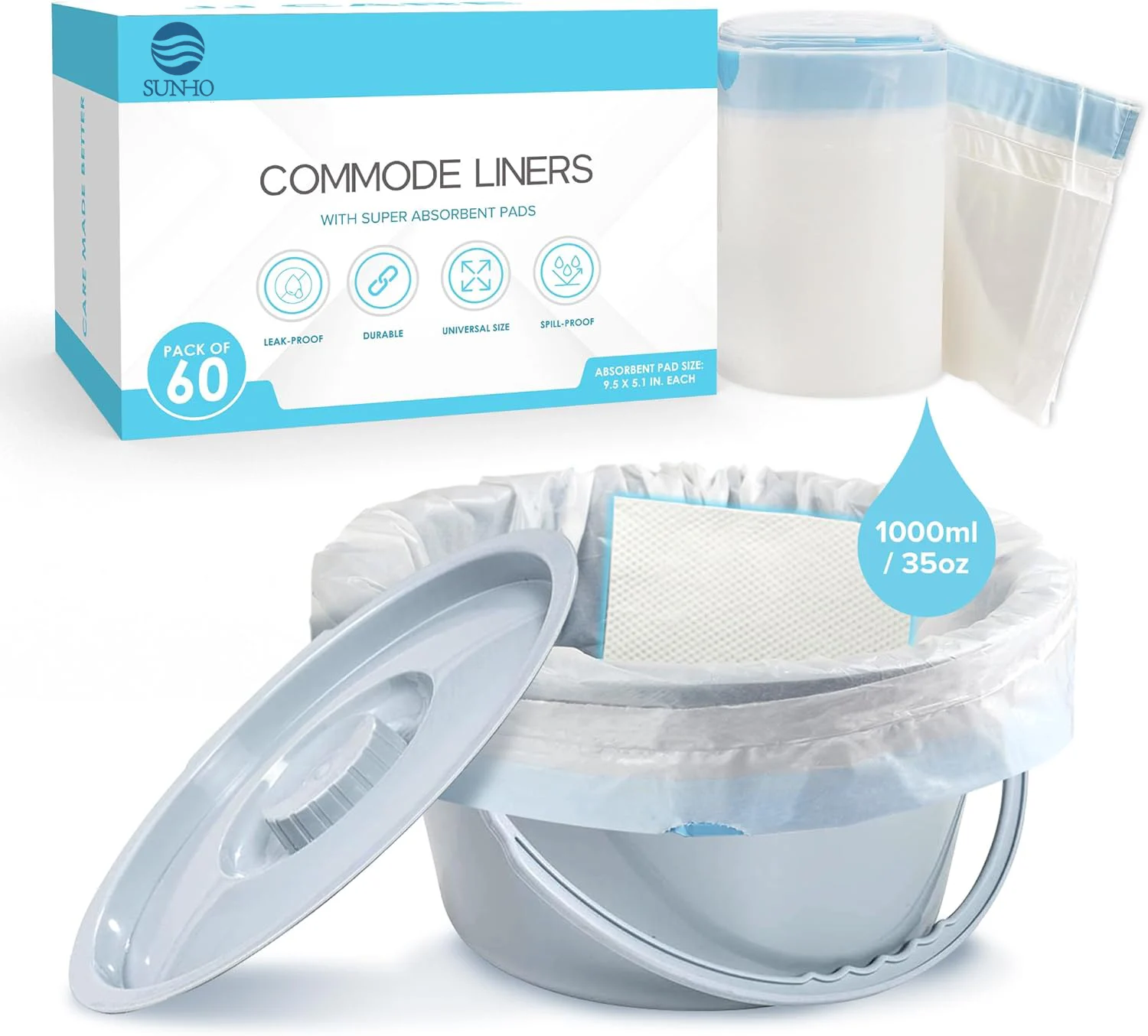
Immediate containment is the first critical step in safe disposal. After use, tightly secure the liner’s drawstring or adhesive closure to fully enclose fluids and volatile odors. Most liners include an absorbent polymer pad that gels liquid waste within seconds, minimizing spill risk. For added safety, place the sealed liner inside a second, leak-resistant plastic bag—double-bagging reduces pathogen exposure by over 70%, per WHO 2021 guidance on infectious waste handling. Knot the outer bag securely. If odor remains a concern, add a few drops of household essential oil or a commercial odor-absorbing sachet before final sealing. Always deposit the wrapped bundle in a lidded, designated waste bin located away from food preparation or high-touch areas. This approach aligns with EPA and CDC recommendations for non-hazardous incontinence waste and prevents cross-contamination in home and care settings.
Infection prevention: Glove use, hand hygiene, and surface disinfection during commode liner handling
Handling used commode liners demands consistent infection control. Don a fresh pair of disposable gloves before touching the liner or commode bucket. Remove and seal the liner without contacting clothing or skin, then tie it off while still gloved. Discard the sealed bag, then peel off gloves from the wrist inward to avoid contaminating hands—dispose of gloves immediately. Wash hands thoroughly with soap and water for at least 20 seconds; if sinks are unavailable, use an alcohol-based hand rub with ≥60% ethanol or isopropanol. Proper hand hygiene reduces healthcare-associated infections by 30–40%, per CDC 2021 data. Finally, disinfect high-contact surfaces—including the commode seat, armrests, and adjacent floor—with an EPA-registered hospital-grade disinfectant effective against enteric pathogens like C. difficile, norovirus, and E. coli. This sequence breaks the transmission chain and protects both caregivers and vulnerable individuals.
Understanding Waste Classification and Regulatory Compliance for Commode Liners
When commode liners qualify as regulated medical waste vs. standard domestic hygiene waste
Accurate classification determines legal disposal pathways and infection control rigor. Under OSHA’s Bloodborne Pathogens Standard (29 CFR 1910.1030), liners contaminated with visible blood, bodily fluids, or used by patients with known bloodborne infections (e.g., HIV, HBV, HCV) must be managed as regulated medical waste. This applies in clinical settings and home care for affected individuals. In contrast, liners used by healthy individuals in private residences—containing only feces and urine—typically qualify as standard domestic hygiene waste, provided no infectious agent is present and local rules permit. However, jurisdictional variation is significant: some states and municipalities classify all human waste as potentially infectious, requiring red biohazard bags and licensed transport. Facilities must consult both EPA guidance and state-specific regulations to assign liners to the correct waste stream. Staff training on visual assessment and segregation protocols helps prevent misclassification, avoids regulatory penalties, and supports consistent infection prevention.
Municipal Disposal Options: Landfill, Composting, and Elder-Care Facility Protocols
Compostability reality check: Less than 12% of U.S. facilities accept commode liners (EPA 2023 data)
Despite “compostable” labeling, fewer than 12% of U.S. composting facilities accept commode liners—even those made from PLA or PBAT—according to EPA’s 2023 National Composting Assessment. Industrial composting requires precise, sustained conditions: temperatures above 55°C for ≥72 hours, controlled moisture, oxygenation, and active microbial communities. Most municipal and regional facilities lack the capacity to guarantee these parameters, especially for complex polymer blends. As a result, liners often contaminate organic streams, leading waste haulers to reject entire loads or divert them to landfill. Placing a liner in a curbside compost bin therefore rarely achieves composting—and may undermine organic waste diversion goals. Methane emissions from anaerobic decomposition in landfills remain a concern, but current infrastructure makes sanitary landfill disposal the most reliable, compliant option for used liners—unless a verified industrial composter explicitly accepts them.
Facility-specific guidance: Integrating commode liner disposal into senior living and home healthcare workflows
Senior living communities and home healthcare providers should embed liner disposal into standardized, infection-conscious workflows. Seal each used liner in a leak-proof secondary bag, then place it in either a biohazard-labeled container (for blood or fluid contamination) or a general waste bin (for routine use), per facility policy and local regulation. Staff must wear disposable gloves, perform immediate hand hygiene post-handling, and disinfect surfaces using EPA-approved agents—practices aligned with OSHA’s Bloodborne Pathogens Standard and CMS Conditions of Participation. Clearly label all bins and train staff annually on waste segregation to prevent accidental placement in recycling or compost streams. In jurisdictions with mandatory organic waste diversion, confirm acceptance directly with local composting authorities before separation attempts. For family caregivers, follow identical containment steps and verify municipal guidelines—many cities provide free online tools or hotlines for waste classification. These integrated, evidence-based steps ensure compliance, reduce liability, and sustain safe, dignified care without operational disruption.
FAQs
Can I flush biodegradable commode liners?
No, biodegradable commode liners are not designed to break down in residential plumbing systems. They require industrial composting conditions, which are absent in standard sewer systems.
What happens if I accidentally flush a commode liner?
Flushing a commode liner can cause severe blockages in sewer pipes and damage wastewater treatment equipment. It may result in costly repairs and environmental harm.
Are all commode liners regulated as medical waste?
No, commode liners are classified as medical waste only if they are visibly soiled with blood or other infectious substances. Otherwise, they are treated as standard hygiene waste.
How can I safely dispose of a used commode liner?
Tightly seal the liner after use, double-bag it for added containment, and place it in a lidded waste bin. Always follow local waste disposal regulations.
Do compostable liners actually compost in home setups?
No, the majority of compostable liners require industrial composting facilities to decompose properly. Home composting setups typically do not reach the required conditions.