
 EN
EN
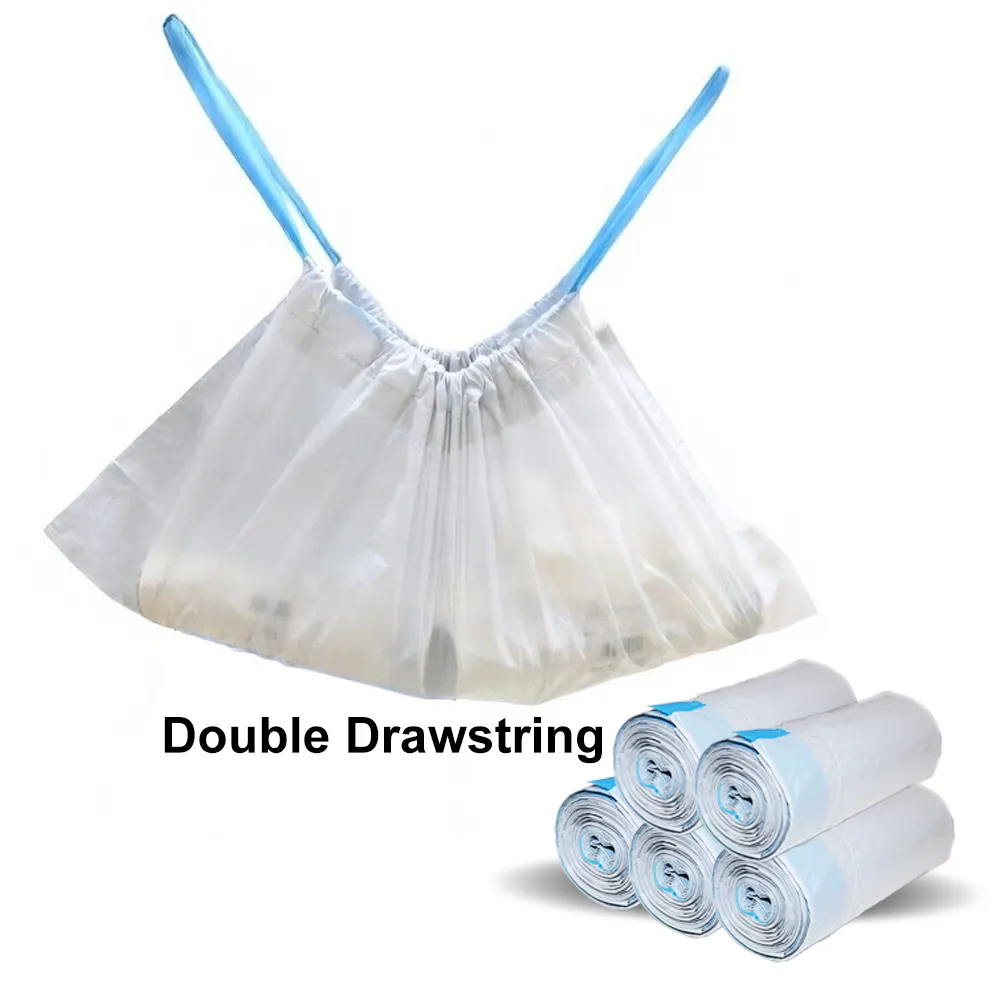
Why Standard Handles Fail Under Heavy Loads
Stress concentration at attachment points and tear initiation mechanics
The failure of a refuse sack under heavy load rarely begins in the body of the film—it almost always starts at the handle. The critical flaw is geometric: the abrupt transition from flexible bag body to rigid handle attachment creates a sharp change in cross-sectional area. When loaded, stress concentrates intensely at these junctions—a well-established principle in mechanical design. In polyethylene films, these zones become initiation sites for tearing, as localized stress can exceed the material’s yield strength long before the main film reaches its rated capacity. Once a micro-tear forms, it propagates rapidly along the cut-out contour of the handle. A 2023 study on polymer failure modes found such stress concentrators can reduce effective load-bearing capacity by over 60% compared to a continuous, unbroken sheet of the same material.
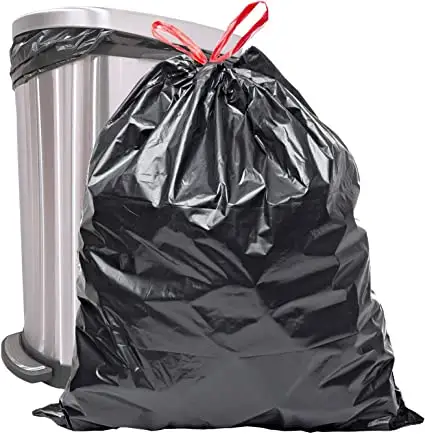
Dynamic vs. static load effects on polyethylene handle integrity (ASTM D882 insights)
A static load presents one engineering challenge; real-world use subjects handles to dynamic forces that dramatically accelerate failure. A 25 kg bag lifted and held steady applies constant tensile force—but dropping it into a bin, swinging it, or carrying it introduces shock loads and repetitive oscillations that can double peak forces. ASTM D882 provides a vital baseline for measuring polyethylene’s ultimate tensile strength and elongation at break, but it is inherently quasi-static. Designers must interpret these results with caution: the rate of load application critically alters material behavior. A film exhibiting high ductility under slow, constant pull may fracture brittlely under rapid, high-energy shock. This explains why handles passing static weight tests still fail catastrophically in high-cycle or impact scenarios—highlighting the need for engineered solutions like reinforced handle refuse sacks, which manage energy dispersal, not just static load. ASTM D882 measures fundamental material capacity—not the far more demanding reality of field-use durability.
Engineering Solutions: How Reinforced Handle Refuse Sacks Improve Load Resistance
Multi-layer lamination and gusseted geometry for distributed stress transfer
Reinforced handle refuse sacks use multi-layer lamination—typically combining high-strength linear low-density polyethylene (LLDPE) with flexible low-density polyethylene (LDPE)—to resist puncture and slow tear propagation. At the handle, layers are fused in a tapered pattern, gradually transitioning from thick reinforcement to the main sack body. This broadens the stress distribution zone, reducing peak stress at the junction. Gusseted side geometry further enhances performance: folded flat for storage but expanding under load to conform to irregular contents without straining heat-sealed handle seams. Industry data shows properly laminated and gusseted designs reliably support payloads exceeding 25 kg without handle separation—outperforming monolithic films by a factor of three (Material Handling Standards, 2023).
Thermal bonding and ultrasonic welding: reliability comparison for reinforced handle refuse sacks
Thermal bonding fuses film layers using heat and pressure, delivering uniform seals—but risks weakening adjacent material if overheated. Ultrasonic welding uses high-frequency vibrations to generate localized heat, preserving film integrity and achieving bond strengths often exceeding 85% of the original film’s tensile strength (ASTM F88). For reinforced handle refuse sacks, ultrasonic welding offers faster cycle times and greater consistency in high-volume production; thermal bonding remains suitable for thicker-gauge constructions where process tolerances are wider. Both methods require precise alignment to avoid stress risers at the handle junction—but ultrasonic welds consistently show fewer catastrophic failures in cyclic load testing (Packaging Science, 2023).
Performance Validation: Tear Resistance and Real-World Durability of Reinforced Handle Refuse Sacks
45kg field-load testing across three leading reinforced handle refuse sacks
Field-load trials simulated industrial waste handling by repeatedly lifting reinforced handle refuse sacks to 45 kg—the upper limit of typical operational demand. All test units from three leading providers completed over 50 lift-and-carry cycles without handle tear, deformation, or seam separation. In contrast, standard non-reinforced sacks—identical in film gauge—failed consistently at attachment points when loads exceeded 18–22 kg. High-speed video analysis confirmed how reinforced designs transferred weight from the grip area into the bag body, avoiding point-load failures. Gusseted geometry and thermal welding enabled uniform stress distribution, preventing the crack propagation seen in weaker alternatives. These results align with ASTM D882 tensile data: reinforced seams averaged 62 N/mm² peak load versus 34 N/mm² for conventional heat-sealed handles—a 82% improvement in joint integrity under repetitive stress.
Debunking the thickness myth: Why film gauge alone doesn’t prevent handle failure
A common misconception equates thicker polyethylene film with superior tear resistance. Yet real-world failures in refuse sacks almost never initiate in the unsupported film body—94% occur at the film-to-handle junction, where tension multiplies due to abrupt geometry changes. Even a 100-micron sack using a simple hot-press seal will tear at the attachment point well before the film reaches its intrinsic strength limit. Reinforced handle refuse sacks overcome this by redistributing load through multi-ply lamination and optimized weld widths—effectively lowering local stress by a factor of three. ASTM D882 data confirm that while film thickness correlates with tensile strength in isolation, overall sack integrity depends on weld toughness—the energy absorbed before fracture. Consequently, a 55-micron reinforced sack withstands 45 kg cyclic lifts, whereas an 80-micron non-reinforced version fails at just 19 kg. Durability hinges on handle bonding—not solely on film gauge.
FAQ
Why do standard refuse sack handles fail under heavy loads?
Handles fail primarily due to stress concentration at the junction between the handle and the sack body, where geometric transitions create localized zones of intense pressure.
How does dynamic loading differ from static loading in terms of bag failure?
Dynamic forces, such as shock loads and oscillations, dramatically accelerate the failure of handles compared to steady static loads, even if the material passes static weight tests.
What methods improve the durability of reinforced handle refuse sacks?
Multi-layer lamination, gusseted geometry, and advanced bonding techniques such as ultrasonic welding enhance durability by reducing stress concentration and improving tensile strength at attachment points.
Is thicker polyethylene film enough to prevent handle failure?
No, thicker film alone does not prevent failure; most issues arise at the handle junction. Reinforcement techniques like multi-ply lamination and optimized welds are required for higher durability.