
 EN
EN
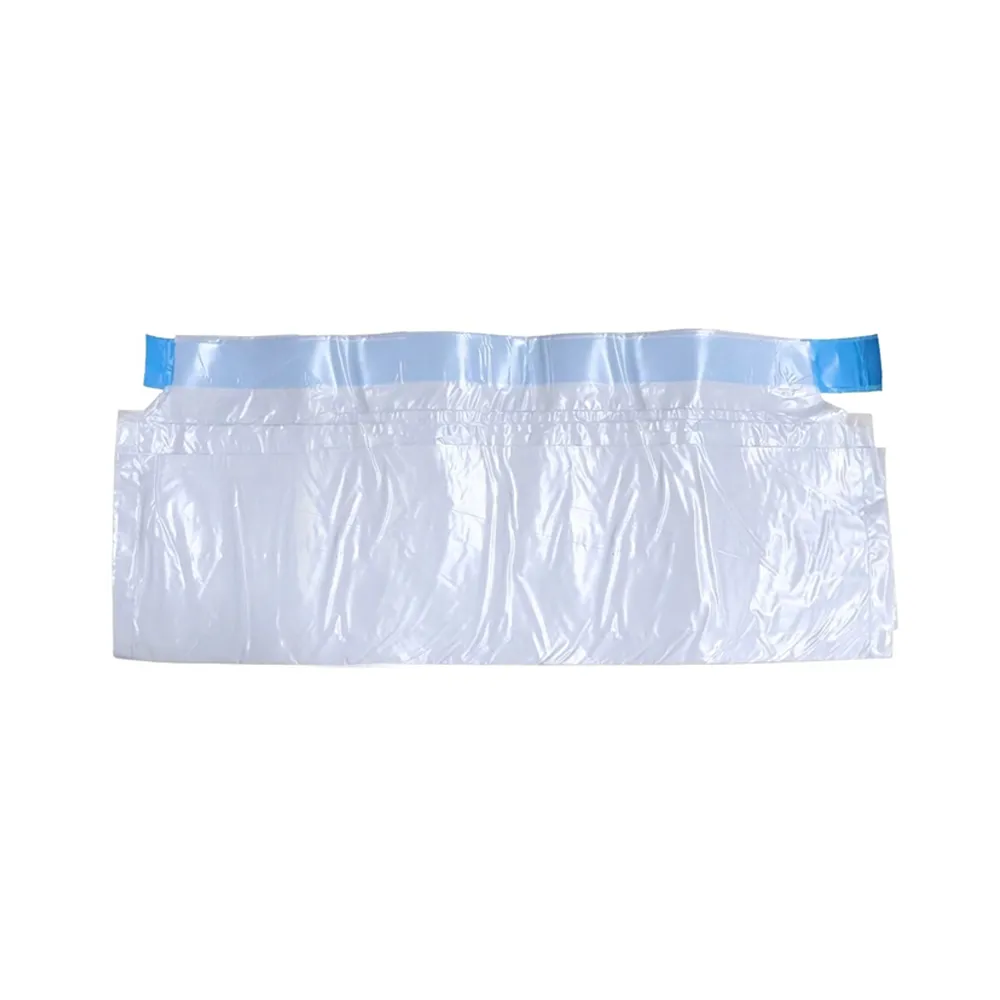
For procurement managers, facility operators, and packaging buyers, choosing between high density and low density trash bags is a decision that affects both operational efficiency and total cost. The terms appear on nearly every product spec sheet, yet the material science behind them — and the practical implications for different use cases — is frequently misunderstood. This guide explains the core differences between HDPE and LDPE trash bags, how those differences translate to real-world performance, and what specifications procurement teams should verify before placing volume orders.
The Material Science Behind HDPE and LDPE
High density polyethylene (HDPE) and low density polyethylene (LDPE) are both thermoplastic polymers derived from ethylene, but their molecular structures differ in ways that produce very different physical properties. HDPE has a more linear, tightly packed molecular chain, which results in a harder, more rigid film with higher tensile strength relative to its thickness. LDPE has a more branched molecular structure, producing a softer, more flexible film with higher elongation before tearing.
In practical packaging terms: HDPE bags are typically thinner and rustlier, with a characteristic crackling sound when handled, and they resist puncture from sharp objects more effectively than their thickness alone would suggest. LDPE bags feel softer and stretchier, conform more easily to irregular container shapes, and can absorb impact and stretch around sharp objects rather than tearing immediately. Both materials can be produced from virgin resin or from blends that include recycled content, and both are available with flat top, wave top, or drawstring closures.
Performance Differences: Where Each Material Excels
For office and light commercial waste where the load is primarily paper, soft materials, and non-sharp items, HDPE liners in the 6–13 micron range (or roughly 0.5 to 0.7 mil equivalent) perform efficiently and cost-effectively. Their high surface area to weight ratio means a roll contains significantly more bags than an equivalent weight roll of LDPE, reducing per-bag cost and storage volume.
For kitchen waste, food service, landscaping, or applications involving sharp-edged materials such as broken glass, metal scraps, or construction debris, LDPE bags are the more appropriate choice. LDPE's elongation properties allow the film to stretch around a point load rather than fracture at contact, which is why it outperforms HDPE in puncture-resistance tests under irregular load conditions. In food service and restaurant applications, LDPE bags rated at 1.0 mil or above are standard because the combination of heavier loads and moisture resistance outweighs the higher per-unit cost relative to HDPE.
Thickness and Load Rating: Reading Specifications Correctly
One of the most common sourcing errors when comparing HDPE and LDPE bags is treating mil thickness as a direct equivalent across materials. Because HDPE has a higher tensile strength, a 0.5 mil HDPE bag can carry a comparable load to a 1.0 mil LDPE bag in many clean-waste applications. Comparing only stated thickness without accounting for material type leads to overpaying for LDPE bags in HDPE-appropriate applications, or underspecifying HDPE bags for applications that require LDPE's puncture resistance.
Procurement teams should request load rating specifications in pounds alongside thickness, and confirm whether the bag has been tested to any relevant standards. For volume institutional buyers, it is also worth requesting documentation on whether the resin is virgin or contains recycled content, as this affects consistency across batches — particularly for bags intended for food-contact adjacent or medical waste adjacent applications.
Closure Types and Their Impact on Workflow
Both HDPE and LDPE bags are available in flat top, wave top (also called star seal or star bottom), and drawstring configurations. The closure choice interacts with material type to affect both performance and labor efficiency.
Flat top bags have a simple unsealed open top; they are the most economical option and are standard for light-duty can liners. Wave top or star-seal bags have a bottom seam constructed by folding and sealing the base in a star pattern, which distributes load stress more evenly than a flat bottom seam and reduces the risk of seam failure under heavy or irregular loads — this construction is particularly relevant when using HDPE bags for higher-load applications. Drawstring bags add a closure mechanism built into the top of the bag, allowing one-handed closure and carrying; they are standard in consumer household settings and increasingly used in commercial settings where the speed of bag tie-off matters for workflow.
For buyers sourcing in volume, specifying closure type alongside material and thickness ensures consistent performance across a facility.
Application Example: Comparing Liner Specifications for a Multi-Site Facility
Consider a facilities management company responsible for a mixed-use property that includes office floors, a restaurant, and a building maintenance workshop. The procurement team initially standardized on a single LDPE liner specification across all three areas. After reviewing usage patterns, they found that the office floors were consuming the same high-spec bags used in the restaurant kitchen — an overcost situation, since dry paper waste in offices does not require LDPE's elongation properties.
By switching the office areas to HDPE flat top liners with a star-seal base and maintaining LDPE bags rated for heavier loads in the kitchen and workshop, the facility reduced liner costs in the office area while maintaining appropriate specifications where impact resistance and moisture management were needed. The decision required comparing density, thickness, and load rating side by side — not just price per box. Suppliers who provide specification sheets with both material type, micron/mil thickness, and load capacity make this kind of audit practical for procurement teams.
What to Verify When Sourcing HDPE and LDPE Trash Bags
For institutional and commercial buyers, supplier qualification should include verification of material type (virgin vs recycled), consistent thickness across production runs, and documentation of closure construction method. Color and print options (available up to 8-color printing in some configurations) can be relevant for waste stream segregation in recycling or clinical environments. ISO 9001:2015 certification and compliance with REACH and RoHS standards indicate that the supplier maintains traceability over the materials used in production — an important consideration when bags may contact food waste, clinical materials, or be used in environments with strict material compliance requirements.
SUNHO Packing (Guangdong Sanhe Packaging Products Co., Ltd.) produces both HDPE and LDPE garbage bags with flat top, wave top, and drawstring configurations, using virgin and certified materials. Their production is certified to ISO 9001:2015 and compliant with REACH and RoHS standards. For procurement teams evaluating suppliers, requesting a sample set that includes both material types with documented thickness and load ratings allows a direct performance comparison against your application requirements before committing to volume.
Frequently Asked Questions
Q: Can I use HDPE trash bags for kitchen waste disposal?
A: HDPE bags can be used for light kitchen waste that does not include bones, broken ceramics, or sharp-edged materials. For typical restaurant or commercial kitchen applications where loads are heavier and moisture-rich, LDPE bags rated at 1.0 mil or above are the more appropriate and reliable choice. HDPE bags are more prone to tearing under the combination of moisture weight and irregular load contact that characterizes kitchen waste.
Q: Why do HDPE bags feel thinner but seem to hold as much as LDPE bags?
A: HDPE's more tightly packed molecular structure gives it higher tensile strength per unit of thickness compared to LDPE. This means a thinner HDPE film can achieve comparable load capacity to a thicker LDPE film in dry-waste, clean-load applications. The difference becomes apparent under puncture or irregular load conditions, where LDPE's elongation properties offer superior resistance.
Q: What does 'star seal' or 'wave top' mean on a trash bag spec sheet?
A: Star seal (also called wave top or star bottom) refers to the bottom seam construction method. Rather than a flat folded seam across the base of the bag, the star seal is created by folding the bottom in multiple directions and sealing the folds together. This distributes the stress of the bag's load across multiple seam points rather than concentrating it in a single linear seam, which significantly reduces the risk of bottom seam failure under heavy or irregular loads.
Table of Contents
- The Material Science Behind HDPE and LDPE
- Performance Differences: Where Each Material Excels
- Thickness and Load Rating: Reading Specifications Correctly
- Closure Types and Their Impact on Workflow
- Application Example: Comparing Liner Specifications for a Multi-Site Facility
- What to Verify When Sourcing HDPE and LDPE Trash Bags
- Frequently Asked Questions