
 EN
EN
For caregivers working in home care, nursing facilities, or rehabilitation centers, maintaining hygiene standards around bedside commodes is one of the most persistent daily challenges. Commode liners offer a practical, clinically aligned solution that reduces direct contact with waste, controls odor, and cuts down on deep-cleaning time — all without requiring patients to leave the bed or walk to a bathroom. Understanding how these liners work and what specifications actually matter in care settings helps caregivers and procurement teams make better sourcing decisions.
What Commode Liners Are and How They Work
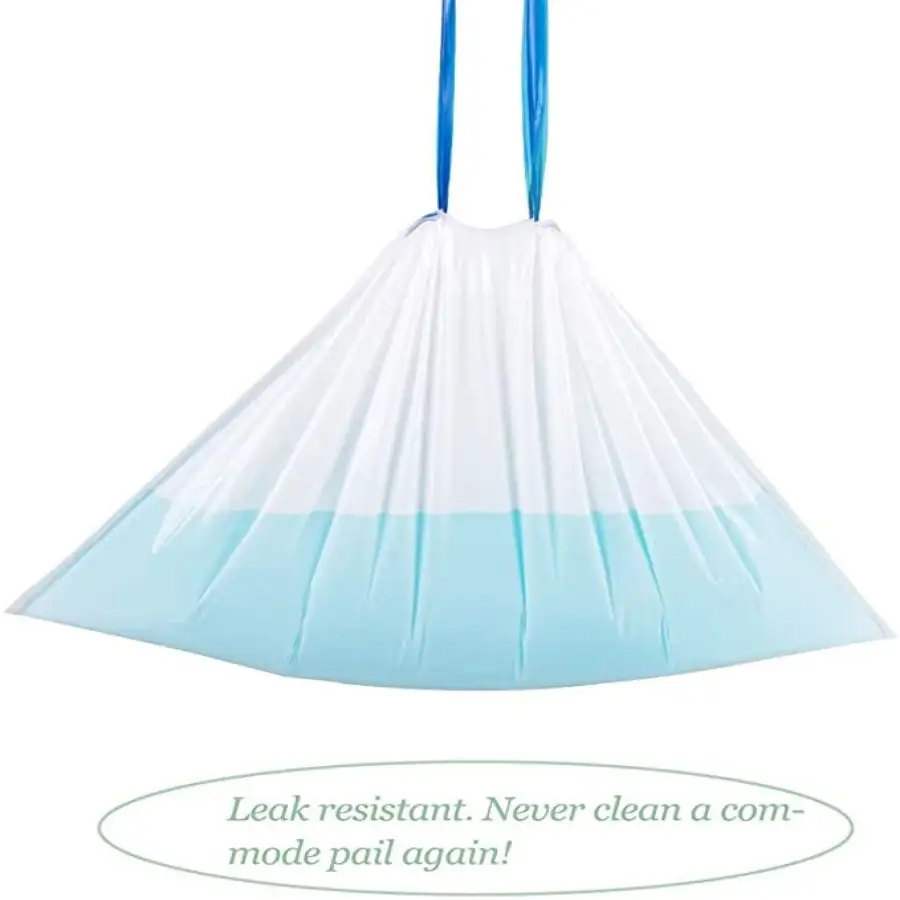
A commode liner is a disposable, fitted plastic bag designed to sit inside the bowl of a bedside commode or portable toilet. When a patient uses the commode, waste is captured in the liner rather than contacting the hard plastic bowl. Once used, the liner is sealed and discarded — no rinsing, no scrubbing, and no lingering contamination risk on equipment surfaces. Most liners designed for elderly care applications include an integrated absorbent pad at the base of the bag. This pad, typically made with superabsorbent polymer (SAP), gels liquid waste on contact, preventing spills during removal and containing odor more effectively than a plain plastic bag alone.
The hygiene benefit is direct: by eliminating bowl contact, commode liners break the transmission pathway for pathogens that thrive in human waste, including Clostridioides difficile spores, norovirus, and common bacterial contaminants that are notoriously difficult to remove from porous or scratched plastic surfaces. For elderly patients with compromised immune systems, this reduction in contact-based transmission risk is clinically meaningful.
Material Selection and Thickness: What Procurement Teams Should Verify
Not all commode liners are equivalent. The two primary base materials are high-density polyethylene (HDPE) and low-density polyethylene (LDPE). LDPE liners are softer and more flexible, making them easier to open and fit into the commode bowl — a practical advantage when caregivers are working quickly. HDPE liners offer higher tensile strength at thinner gauges. For commode liner applications, virgin-grade LDPE or HDPE is preferred over recycled resin, as medical and care environments require materials free from recycled contaminants.
Thickness, measured in mils (thousandths of an inch), matters significantly. Liners rated at 1.5 mil to 3.0 mil or above are appropriate for bedside commode use in care settings. Liners below this range may puncture during use or fail when the caregiver ties off and lifts the full bag. Procurement teams sourcing for institutional use should request thickness specifications in writing and confirm whether the stated thickness refers to single-ply or averaged measurements across the film.
For institutional procurement, also confirm that the absorbent pad is constructed with SAP-grade materials and that the liner opening diameter is compatible with the commodes being used. Standard bedside commodes typically have bowl openings in the range of 17 to 20 inches; liners should be specified to fit without excessive bunching or gaps at the rim.
Application Example: Reducing Cross-Contamination in a Home Care Setting
Consider a scenario common in home care: a caregiver manages multiple elderly patients across a morning shift. Without commode liners, each bedside commode requires physical cleaning after use — emptying the bowl, rinsing, applying disinfectant, and drying before the next use. In a time-constrained environment with one caregiver covering several patients, this process creates windows of delayed cleaning and potential cross-contamination via gloves, cleaning tools, and shared disinfectant solutions.
With fitted commode liners that include absorbent pads, the caregiver removes the sealed liner directly after use, disposes of it in a waste bag, fits a new liner, and moves on. The commode bowl itself is not contaminated and does not require wet cleaning between uses. This streamlined workflow is not only more hygienic — it also reduces caregiver fatigue and the risk of inadequate cleaning under time pressure. The absorbent pad ensures that even during removal, there is no liquid movement that could splash or contaminate surfaces or the caregiver's PPE.
Odor Control and Patient Dignity
Odor management is closely linked to patient dignity in elderly care. Prolonged odor from an uncovered or inadequately cleaned commode bowl can cause distress to both patients and family members, particularly in shared living spaces or small rooms. Commode liners with SAP-based absorbent pads gel liquid waste rapidly, substantially reducing the volatile compounds that generate odor compared to unabsorbed liquid sitting in an open bowl. When the liner is sealed before disposal, residual odor is further contained.
From a patient dignity standpoint, the quick and discreet workflow enabled by commode liners also reduces the time a patient is exposed to an open commode bowl. This is a meaningful, though often understated, quality-of-care factor in long-term and palliative care settings.
Supplier Quality Considerations for Institutional Buyers
For facilities purchasing commode liners in volume, supplier qualification goes beyond asking for a sample. Key verification points include: confirmation of virgin material use, consistent film thickness across production batches, absorbent pad performance under realistic waste volumes, and packaging that keeps individual liners hygienic until point of use. Suppliers certified to ISO 9001:2015 and holding relevant material certifications such as REACH and RoHS demonstrate a baseline of production and material traceability standards that institutional buyers should expect.
SUNHO Packing (Guangdong Sanhe Packaging Products Co., Ltd.), a manufacturer established in 2009 and certified to ISO 9001:2015 (valid through 2027) with GRS V4.0 and REACH/RoHS certifications, produces commode liners using virgin LDPE and HDPE materials at thicknesses from 1.5 mil to over 3.0 mil, with SAP-based absorbent pads. Their 99.8% pass rate and capacity of 2 million units per day reflect a production system suited to institutional volume requirements. For procurement teams evaluating suppliers, asking for documented batch test records, material safety data sheets (MSDS), and sample pads for absorption performance testing provides a practical baseline for comparison.
Frequently Asked Questions
Q: Can commode liners be used with any brand of bedside commode?
A: Most commode liners are designed to fit standard bedside commodes with bowl openings between 17 and 20 inches. Before ordering in bulk, confirm the interior bowl dimensions of the commodes in use and request liners with a corresponding fit specification from the supplier. Some liners include an elastic or drawstring top to secure the fit and prevent slippage during use.
Q: How do I dispose of used commode liners safely?
A: Used commode liners containing absorbent pads should be treated as sanitary waste. Seal the liner by tying the top or using the drawstring if provided, then place it in a designated sanitary waste bag. Follow local regulations for disposal of sanitary or clinical waste — in most home care contexts, sealed commode liners are accepted in standard household waste, but institutional settings may be subject to specific waste disposal guidelines.
Q: What is the difference between a commode liner with an absorbent pad and one without?
A: A liner without an absorbent pad captures waste but leaves liquid mobile inside the bag. This increases the risk of spills during removal, bag failure under weight, and odor from unabsorbed liquid. A liner with an SAP-based absorbent pad gels liquid on contact, which stabilizes the bag contents, reduces odor, and makes disposal safer and more hygienic for caregivers. For clinical and care home environments, liners with absorbent pads are the recommended standard.
Table of Contents
- What Commode Liners Are and How They Work
- Material Selection and Thickness: What Procurement Teams Should Verify
- Application Example: Reducing Cross-Contamination in a Home Care Setting
- Odor Control and Patient Dignity
- Supplier Quality Considerations for Institutional Buyers
- Frequently Asked Questions