
 EN
EN
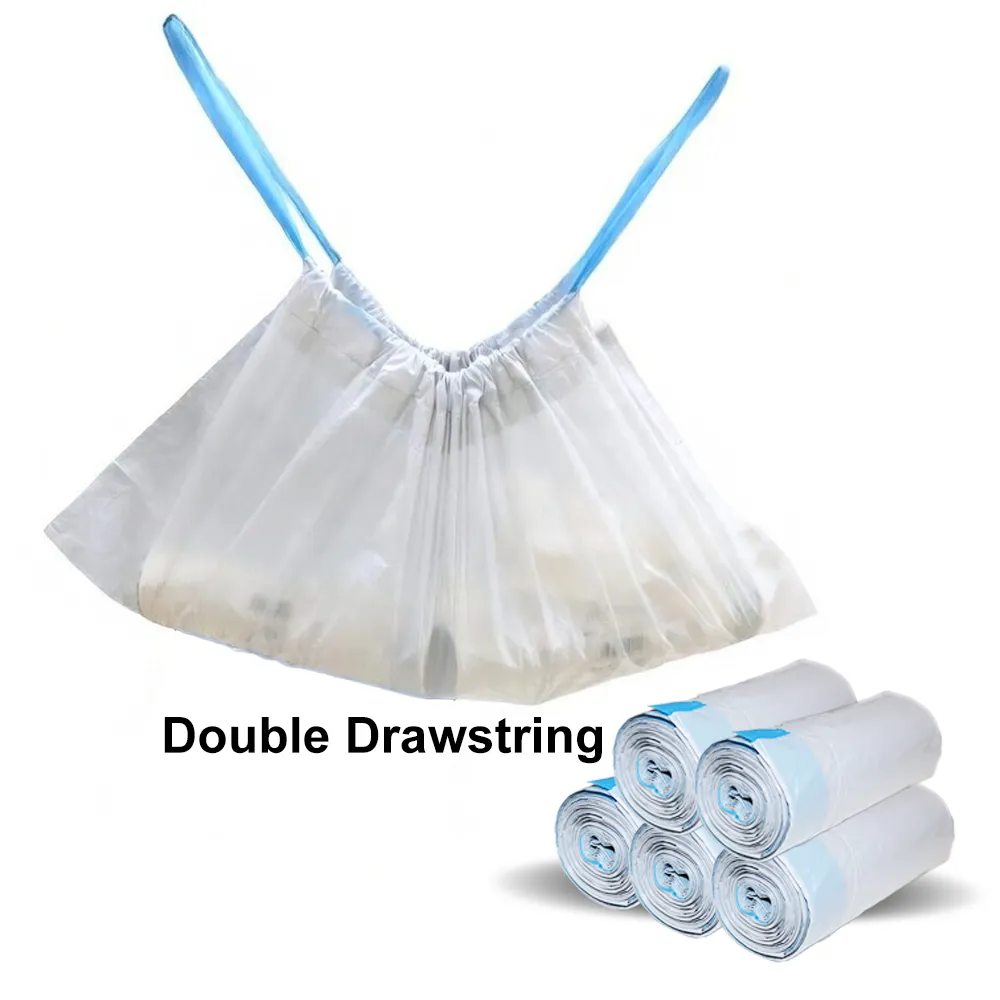
Why Drawstring Trash Bags Outperform Standard Options
Leak resistance and odor containment through secure drawstring closure
Integrated drawstring closures actually form a real seal something regular trash bags just don't have which means no more gaps for stuff to leak out or smells to get through. When pulled tight, these closures really squeeze down on the top of the bag so nothing can sneak in or out, keeping those nasty VOCs locked inside from all the rotting food we toss away. Kitchen and bathroom areas need this kind of containment badly because spilled liquids will attract bugs fast, and bad smells hanging around make the whole house smell terrible. Nobody wants to deal with that mess.
Hygiene benefits: reduced hand contact and cross-contamination risk
The drawstring design on trash bags really cuts down on having to touch garbage when sealing them up or taking them out. Just give those strings a tug and voila! No need for fumbling with knots or getting hands dirty on gross surfaces. Some research shows these bags cut down on germ spread by around 72% versus regular plastic ones, though I should note most of those studies come from lab settings rather than real homes. For places where germs love to hang out like kitchens and bathrooms, this matters a lot. When people aren't constantly transferring bacteria from trash cans to countertops or sinks, it makes a big difference in keeping the whole house cleaner overall.
Seal Construction Matters: Star Seal, Gusset Seal, and Performance Trade-offs
Star seal: superior strength and leak prevention for heavy-duty trash bags
The star seal method joins plastic layers at several spots along the bag, which creates stronger seams that spread out pressure evenly on the bottom. According to some tests cited in Waste Management Review last year, these special seals cut down on broken seams by around two thirds when something heavy is placed inside compared to regular heat sealing methods. These bags really shine when dealing with things like leftover building materials, soggy yard trash, or those tricky recyclables with sharp edges that tend to tear through normal seals. What makes them stand out even more is how they stop liquids from leaking through the stitching areas. That means people can toss potentially messy stuff directly into star-sealed drawstring bags instead of needing separate liner bags for their bins.
Gusset seal vs. flat-bottom designs: capacity, stability, and fit in standard bins
Gusset-sealed bags feature expandable side panels that unfold into a box-like base, delivering up to 30% more usable capacity than flat-bottom equivalents when fully deployed. This design stabilizes tall bins, prevents slippage, and improves weight distribution. Flat-bottom bags, however, adapt more readily to irregular or curved containers. Key considerations include:
- High-volume kitchens: Gusseted designs maximize capacity and resist bursting under overfilling
- Narrow or curved bins: Flat bottoms reduce air gaps and improve conformity
- Standard 13-gallon kitchen containers: Achieve optimal fit and upright stability with gusseted bags
Smaller decorative or under-sink bins often benefit from flat-base flexibility—prioritizing fit over volume.
Material Science Behind Reliable Trash Bags
HDPE vs. LDPE: tensile strength, puncture resistance, and flexibility trade-offs
The two main types of plastic used in today's garbage bags are high density polyethylene (HDPE) and low density polyethylene (LDPE). HDPE is really strong stuff, with tensile strength ranging from about 3,000 to nearly 5,000 psi. This makes it great at resisting tears from sharp objects or heavy items in the bin. However, HDPE doesn't stretch much and isn't very flexible when conforming around oddly shaped items. On the other hand, LDPE can stretch up to 600% of its original length and absorbs impacts well. That means it handles irregular shapes and shifting contents better than HDPE does. The downside? LDPE tends to give way faster when subjected to constant pressure over time compared to its higher density counterpart.
| Property | HDPE | LDPE |
|---|---|---|
| Tensile Strength | High (3,000–4,800 psi) | Moderate (1,400–2,800 psi) |
| Puncture Resistance | Excellent | Good |
| Flexibility | Low | Very High |
Eco-conscious options: biodegradable and compostable trash bags — performance realities
The plant based options like PLA (which stands for polylactic acid) and PBAT (or polybutyrate adipate terephthalate) seem promising from an environmental standpoint, though they do come with some practical limitations. The best quality compostable bags can hold around 60 pounds during lab testing, but generally show about 30 percent less resistance to punctures compared to regular plastic products. For something to truly break down as compost, it needs those special industrial conditions - temperatures above 140 degrees Fahrenheit for at least 84 days. Unfortunately, less than one out of every six cities across America actually has these kinds of facilities available. Water is another problem area too. When these certified compostable bags get wet, they tend to start breaking down 40% quicker than normal. That makes them more likely to tear early on and leak contents, which defeats the whole purpose of using them in the first place.
Matching Drawstring Trash Bags to Your Specific Waste Needs
Picking the right drawstring trash bag really comes down to matching what's going in it with the bag's features. Kitchens are tricky because they deal with all sorts of messes from food scraps to juice spills and sharp packaging. That's why leak proof bags that can stand up to tearing are so important there. We find that 13 gallon LDPE bags with those star seals work pretty well for most kitchen bins since they stay flexible but still resist punctures and keep things sealed tight. Bathrooms tend to have lighter stuff like tissues, wrapping paper, and personal items. For these spaces, smaller HDPE bags between 4 and 8 gallons usually do the job fine without taking up too much space under the sink. Offices and bedrooms mostly collect paper products and other dry waste. Standard flat seal bags actually work just as good here and save money over time compared to the fancier options.
The thickness of materials measured in mils really matters when it comes to matching them with different types of waste. For things like broken glass, food bones, or hard packaging boxes, going with something around 0.9 mil or thicker makes sense. But most regular dry waste doesn't need anything heavier than about 0.7 mil. Getting this right means businesses aren't spending extra money on unnecessarily tough materials while still keeping those annoying tears and spills at bay. When companies pick the right thickness for their specific needs, they actually make disposal easier overall. Studies show this approach can slash waste management expenses by nearly 20% per year. Plus there's an added bonus for the environment since using just enough material instead of too much helps cut down on unnecessary resource consumption without compromising safety or effectiveness.
FAQ
Why are drawstring trash bags considered better than standard trash bags?
Drawstring trash bags offer superior leak resistance and odor containment through secure closures. They also reduce hand contact and cross-contamination risks, keeping your home cleaner.
What is the difference between HDPE and LDPE trash bags?
HDPE bags are stronger and offer excellent puncture resistance but lack flexibility. LDPE bags are more flexible and can handle irregular shapes better, but they are less puncture-resistant.
Are biodegradable and compostable trash bags effective?
While environmentally promising, these bags have limitations, such as a shorter lifespan and the need for specific industrial composting conditions to fully decompose.
How do I choose the right trash bag for my needs?
Match the bag's features to your waste type. For kitchen use, leak-proof and puncture-resistant LDPE bags with star seals are recommended. In bathrooms, HDPE bags work well for lighter waste.