
 EN
EN
Understanding the Core Problem: Why Cat Litter Box Liners Leak
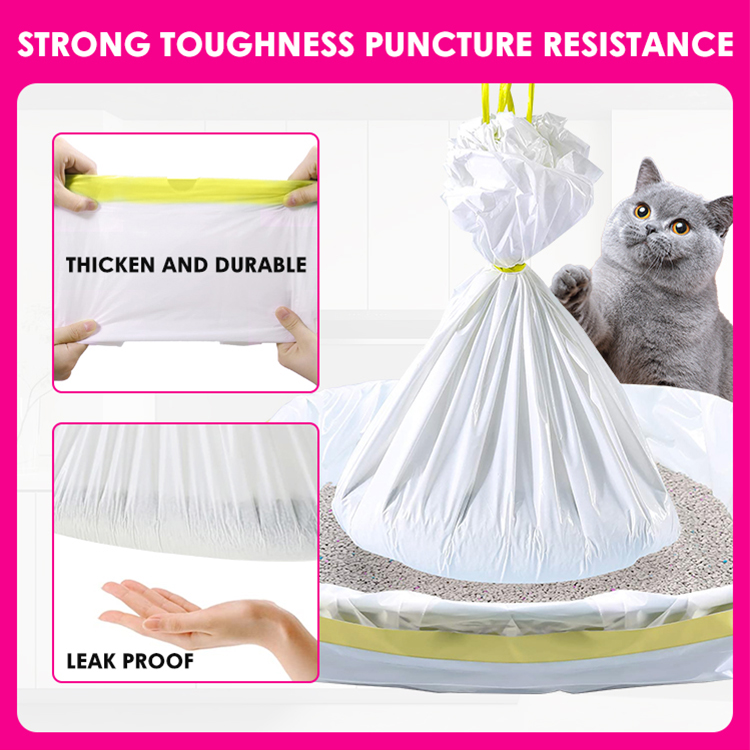
Leaking is the most common frustration for cat owners using litter box liners. Typically, leakage occurs when liquid waste—urine—passes through microscopic pores or thin spots in the liner material, or when the liner tears under the weight of heavy clay litter. Many standard liners are manufactured with a single layer of basic polyethylene, which lacks the structural integrity to resist punctures from a cat’s claws or the stress of lifting a full bag.
To effectively stop leaking, you need to focus on the quality and design of the cat litter box liners. A superior liner acts as a true barrier, not just a simple cover. Based on manufacturing standards, an anti-leak liner typically requires a material thickness that balances flexibility with puncture resistance, alongside a construction method that reinforces stress points like the bottom seal.
Choosing the Right Material and Thickness for Leak Protection
The primary factor determining a liner’s leak resistance is its material composition and thickness. Most cat litter box liners are made from HDPE (High-Density Polyethylene) or LDPE (Low-Density Polyethylene). HDPE offers excellent puncture resistance and stiffness, making it a robust choice for preventing claw marks that lead to leaks. LDPE, while more flexible, requires a higher gauge to achieve similar protection.
For reliable leak protection, look for specifications that indicate a heavy-duty design. For instance, some high-quality liners feature a thickness of around 30 microns, which provides a substantial barrier against moisture. In contrast, standard economy liners often range from 10 to 15 microns, making them prone to immediate failure. SUNHO, for example, manufactures custom cat litter box liners with thickness tailored to specific needs, ensuring that the material itself is your first line of defense against leaks.
The Importance of Proper Sizing in Preventing Leaks
A surprisingly common cause of leakage is using a liner that is the wrong size for the litter box. When a liner is too small, it stretches tightly across the box. This tension makes the material thinner and more susceptible to tearing from cat claws or the weight of litter. Conversely, an oversized liner creates excessive bunching, which can trap liquid and lead to seepage through folds.
To prevent this, measure your litter box carefully. The liner should be large enough to drape over the sides of the box with some slack, allowing the litter to settle evenly. A properly sized liner, such as those you can customize with dimensions like 104 cm by 45.7 cm for specific large boxes, will have enough material to conform to the box without overstressing any single point. This simple step can dramatically reduce the risk of puncture-related leaks.
Double Bagging vs. High-Quality Single Liners: A Comparison
Many cat owners resort to double bagging—using two liners at once—in an attempt to stop leaks. While this can provide a temporary solution, it is often less economical and can be wasteful. Two thin liners still leave gaps where liquid can seep between the layers, and they do not address the root issue of poor puncture resistance.
A more effective and cost-efficient approach is to invest in a single, high-quality liner specifically engineered for leak resistance. These premium options often feature reinforced bottom seals and are manufactured using advanced processes. For example, a liner with a star-sealed bottom distributes weight and pressure more evenly than a standard flat seal, significantly reducing the chance of seam failure. By choosing a better single liner, you use less plastic while achieving superior protection.
The Role of Manufacturing Quality and Seam Integrity
The manufacturing process directly impacts whether a liner will leak. Look for products from manufacturers with certified quality control systems. An ISO 9001 certification indicates that the production facility follows strict, standardized procedures for quality management, which directly translates to more consistent seam integrity and material strength.
Seams are the weakest point on any plastic bag. Poorly heat-sealed seams can separate under the weight of wet litter or when you pull the bag out. Professional manufacturers use automated production lines with precise temperature and pressure controls to create fusion seals that are often stronger than the surrounding material. When evaluating cat litter box liners, those produced by companies holding multiple patents (such as 20+ invention and utility model patents) are more likely to employ innovative sealing technologies that prevent leaks effectively.
Practical Handling Tips to Avoid Accidental Leaks
Even the best liner can leak if installed or removed incorrectly. First, ensure the litter box is completely dry and clean before inserting the liner. Any residual moisture or sharp crystal fragments can create a starting point for a tear. When placing the liner, avoid using your fingernails or any sharp objects to smooth it out.
Second, do not overfill the box with litter. Excessive weight stresses the liner’s bottom seam. When it is time to change the liner, pull the edges upward evenly, gathering the litter into a central bundle. Avoid jerking or lifting the bag from a single corner, as this concentrates all the weight on one seam. By treating the liner gently, you allow its anti-leak design to function as intended.
Conclusion: Selecting a Reliable Liner for a Leak-Free Experience
Stopping cat litter box liners from leaking is achievable by combining the right product with correct usage habits. The key takeaways are to select a liner made from durable HDPE or LDPE with a sufficient thickness (around 30 microns for heavy-duty use), ensure it is properly sized for your box, and choose products from reputable manufacturers with robust quality controls like ISO certification.
By prioritizing these features, you move beyond temporary fixes and invest in a true leak-proof solution. A well-made liner not only protects your litter box and floors but also simplifies cleanup, making the routine less of a chore. When searching for cat litter box liners, treat them as an essential tool rather than an afterthought, and your experience—and your cat’s—will be much cleaner and drier.
Table of Contents
- Understanding the Core Problem: Why Cat Litter Box Liners Leak
- Choosing the Right Material and Thickness for Leak Protection
- The Importance of Proper Sizing in Preventing Leaks
- Double Bagging vs. High-Quality Single Liners: A Comparison
- The Role of Manufacturing Quality and Seam Integrity
- Practical Handling Tips to Avoid Accidental Leaks
- Conclusion: Selecting a Reliable Liner for a Leak-Free Experience